

National AI Strategy
Start right with a helicopter view of the entire gamut of possibilities in AI, and build strategic vision.
Guiding Governments and Think-tanks toward responsible & modern AI governance
Start right with a helicopter view of the entire gamut of possibilities in AI, and build strategic vision.

Each government dept. or Ministry can have their own Missions, in line with the National Strategy.

Successful AI enablement needs a well-thought legal and administrative scaffolding from the start.
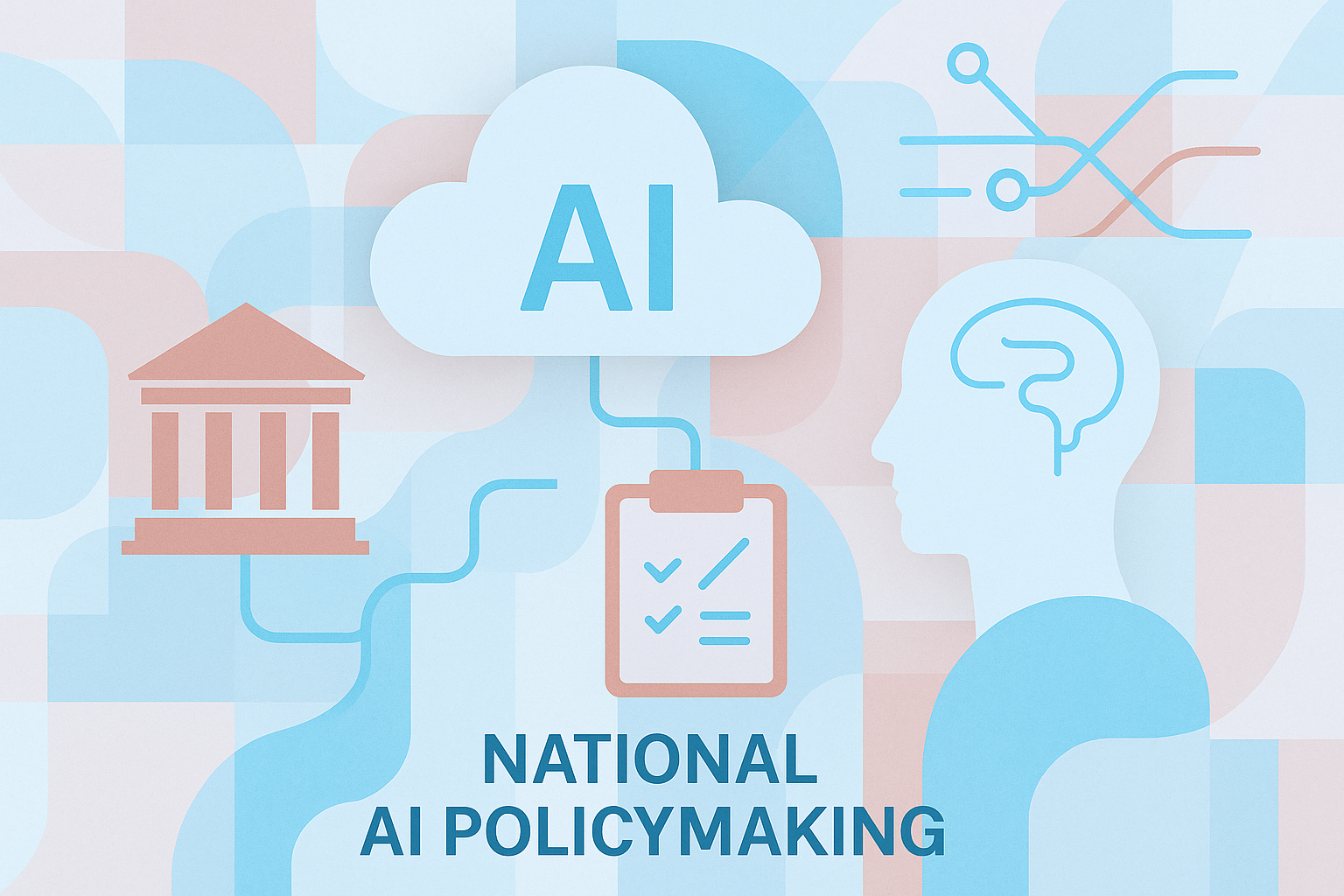
Billion Hopes offers you strong and relevant insights into building short-, mid- and long-term plans for AI strategies, missions and governance structures. Leverage AI for national prosperity. And real impact.
How can we regulate AI without stifling innovation?
What principles should guide AI policies?
How do we balance automation with human accountability?
How can internal governance align with global AI standards?
What is the best National AI Strategy?
Artificial Intelligence (AI) is transforming every dimension of human and organizational activity — from business decisions to public administration. Yet, as its influence grows, so does the need for clear, ethical, and future-ready policies . The AI Policymaking Program by Billion Hopes is a bespoke engagement for governments, think-tanks and policy leaders seeking to craft sound, actionable, and responsible frameworks for the AI era. This program brings together expertise in AI ethics, governance, strategy, and law — empowering decision-makers to lead with foresight and integrity.
AI has outpaced traditional regulation. The challenge is no longer just about innovation — it’s about creating guardrails that enable progress without compromising public trust, privacy, and fairness . Every government and institution now faces urgent questions. This engagement provides the clarity and structure needed to answer those questions — responsibly, inclusively, and sustainably . As we move ahead in the 21st century, critical questions need a thorough deliberation and clear answers like never before.
The AI Policymaking Consulting Program is a minimum 3-month engagement , designed for senior decision-makers shaping the policies and frameworks of an AI-enabled society. Keyman or top management involvement a must from the beginning. Each assignment is bespoke , customized to the needs of either public or private institutions, and may include:
Assessment of current policy frameworks and global benchmarks
Development of AI governance models and ethical guidelines
Risk, bias, and accountability audits
Stakeholder and ecosystem consultation planning
Drafting of AI laws, principles, or internal policies
Training of Officers, Ministers, and governance teams

This program is ideal for
Those drafting or revising laws, regulations, or ethical frameworks for AI and emerging technologies.
Ministries or commissions exploring AI adoption and oversight strategies .
Policy think tanks, public research institutions, and intergovernmental bodies seeking expert input on AI governance and ethics .
Those drafting or revising laws, regulations, or ethical frameworks for AI and emerging technologies.
Check the detailed listing of structured tasks that make a comprehensive process. Depending on our engagement, we can customize it for you.

By the end of the program, participants and organizations will:


We works at the intersection of AI, governance, education, and transformation — empowering both public and private sector leaders to navigate the ethical and policy challenges of emerging technologies. Our consulting engagements combine deep AI expertise , policy design experience , and leadership mentoring , ensuring that your AI governance frameworks are visionary, compliant, and actionable. Each engagement is highly selective , and Billion Hopes reserves the right to accept or decline any assignment to maintain quality, focus, and purpose alignment.
Added to cart
Check out our shop to see what's available
We use necessary technologies to run this site. With your permission, we may also use optional functional, analytics and marketing technologies. You can accept, reject or choose by category.
Privacy profile: Worldwide privacy-first
Necessary technologies are always active because they are required for security, login, checkout and requested site functions. Optional categories remain off unless you choose them.
Security, authentication, shopping cart, checkout and core site functions.
Optional features such as third-party media, maps and enhanced preferences.
Audience measurement and usage analytics used to understand and improve the site.
Advertising, conversion measurement, remarketing and cross-site tracking technologies.